
The initiative reflects GCI’s wider approach to Caribbean education:
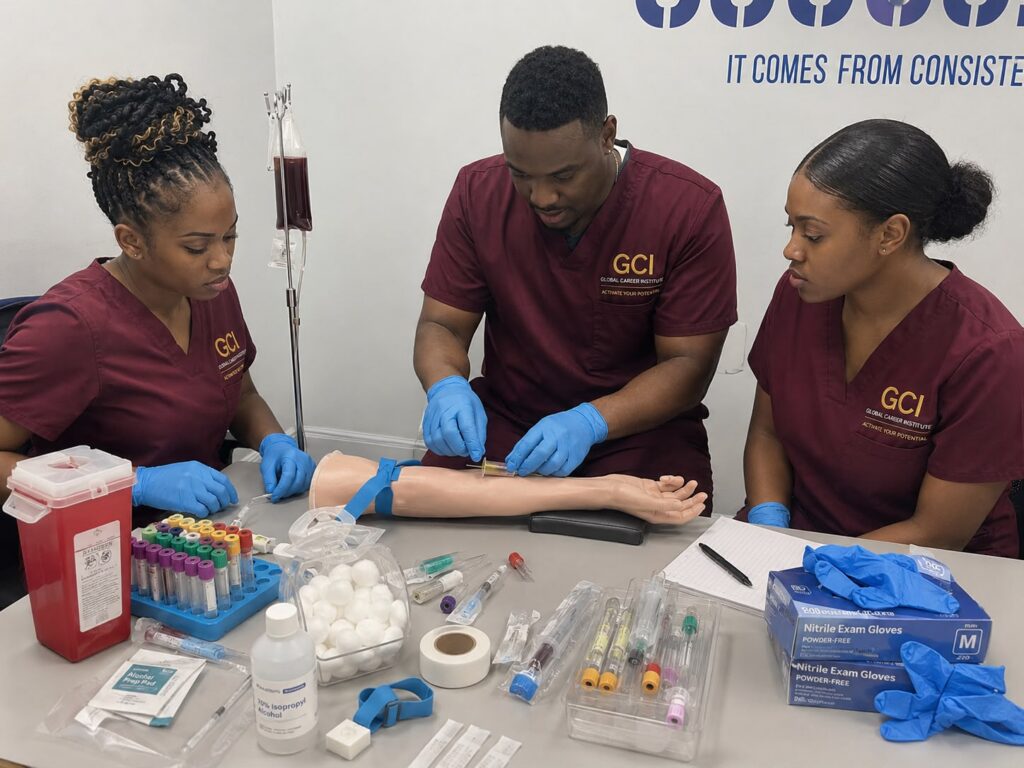
During the training, the three participating students were able to develop and reinforce practical competencies associated with phlebotomy and blood collection within a supervised learning environment.
The collaboration also reflects a shared interest in strengthening skills development and workforce capacity within Saint Lucia.
GCI Partners with L.I.F.E for regional training.
CASTRIES, SAINT LUCIA — Global Career Institute (GCI) has strengthened its regional training network through a collaborative initiative with L.I.F.E. – Lewis Is For Emergency, providing GCI phlebotomy students in Saint Lucia with access to practical, hands-on training in Castries.
Through the partnership, GCI students completed practical phlebotomy training in Saint Lucia, allowing them to reinforce the theoretical knowledge developed during their programme through supervised skills practice closer to home.
The initiative reflects GCI’s wider approach to Caribbean education: providing students with access to structured academic instruction while developing local partnerships that can support practical and competency-based learning within their own countries.
Expanding Practical Training Access Across the Caribbean
Building Regional Training Partnerships
For students pursuing healthcare education across small island states, access to appropriate practical training can be one of the most significant barriers to completing career-focused programmes. Rather than requiring every regional student to travel to Trinidad and Tobago for practical components, Global Career Institute has been developing relationships with suitable organisations and professionals across the Caribbean to support supervised learning opportunities where feasible.
A Caribbean Approach to Workforce Development
Global Career Institute serves learners from Trinidad and Tobago and across the wider Caribbean, including students pursuing programmes in allied health, healthcare administration, business and professional development. As the Institute expands its regional footprint, partnerships with organisations such as L.I.F.E. are increasingly important to creating sustainable training pathways for students outside GCI’s primary physical location.
The collaboration with L.I.F.E. in Castries demonstrates this model in practice.
During the training, the three participating students were able to develop and reinforce practical competencies associated with phlebotomy and blood collection within a supervised learning environment.
For GCI, these arrangements form part of a larger objective: creating a regional education model that combines accessible learning, practical competency development and professional preparation.
Global Career Institute serves learners from Trinidad and Tobago and across the wider Caribbean, including students pursuing programmes in allied health, healthcare administration, business and professional development. As the Institute expands its regional footprint, partnerships with organisations such as L.I.F.E. are increasingly important to creating sustainable training pathways for students outside GCI’s primary physical location.
The collaboration also reflects a shared interest in strengthening skills development and workforce capacity within Saint Lucia.
“Regional education cannot simply mean delivering an online class to a student in another country. We also have to think about how that student develops practical competence, accesses professional environments and connects learning to the workforce within their own community.”
T.A. Simone Blackwood
Executive Director, Global Career Institute
Building Regional Training Partnerships
The Saint Lucia initiative represents a small cohort, but an important model. By working with credible local training partners, GCI can continue building a network that gives Caribbean students greater access to practical learning while reducing unnecessary geographic barriers.
GCI continues to explore partnerships with healthcare organisations, laboratories, training providers, employers and other institutions throughout the Caribbean to support practical education, clinical exposure, workforce preparation and professional development.
These partnerships form part of the Institute’s commitment to making career-focused education more accessible while maintaining appropriate standards for student learning and competency development. The collaboration with L.I.F.E. is therefore more than a single training activity. It represents the type of regional cooperation required to strengthen education and workforce development across Caribbean states.
Eligible students from other Caribbean territories may enrol in the programme subject to the delivery arrangements available for their country and the requirements governing practical training.
Prospective regional students should contact GCI Admissions before registration to confirm the arrangements applicable to their location.
About L.I.F.E. – Lewis Is For Emergency
L.I.F.E. – Lewis Is For Emergency is a Saint Lucian-owned business focused on strengthening Emergency Medical Services (EMS) through emergency response and emergency medical training.
The organisation supports the development of practical emergency-response skills and has participated in community and national preparedness initiatives in Saint Lucia. Its work reflects a broader commitment to improving emergency readiness, building local capacity and strengthening the skills of individuals who may be called upon to respond in critical situations. Through its collaboration with Global Career Institute, L.I.F.E. also contributes to expanding access to practical healthcare training for students in Saint Lucia.
Work With GCI to Build Saint Lucia’s Workforce
Students need opportunities to practise what they have learned. Employers need people with relevant skills. Communities need a workforce that is prepared to respond to changing healthcare, business and service-sector needs. Global Career Institute is therefore inviting employers, healthcare providers, laboratories, clinics, care organisations, training institutions, NGOs and other organisations across Saint Lucia to work with us in developing stronger pathways from education to employment.
Education. Employment. Partnership.
This approach reflects the United Nations Sustainable Development Goals, particularly SDG 4: Quality Education, which includes developing relevant technical and vocational skills for employment; SDG 8: Decent Work and Economic Growth, which promotes productive employment and decent work; and SDG 17: Partnerships for the Goals, which recognises the importance of effective partnerships in achieving sustainable development.
For GCI, workforce development is not simply about enrolling students. It is about creating stronger connections between education, practical experience, employers and economic opportunity throughout the Caribbean.